
Pure Water & Clean Energy
Bringing Clean Water To Every Corner On Earth
Pure Water & Clean Energy
Bringing Clean Water To Every Corner On Earth
PX Pressure Exchangers that dramatically reduce power consumption in seawater reverse osmosis systems.
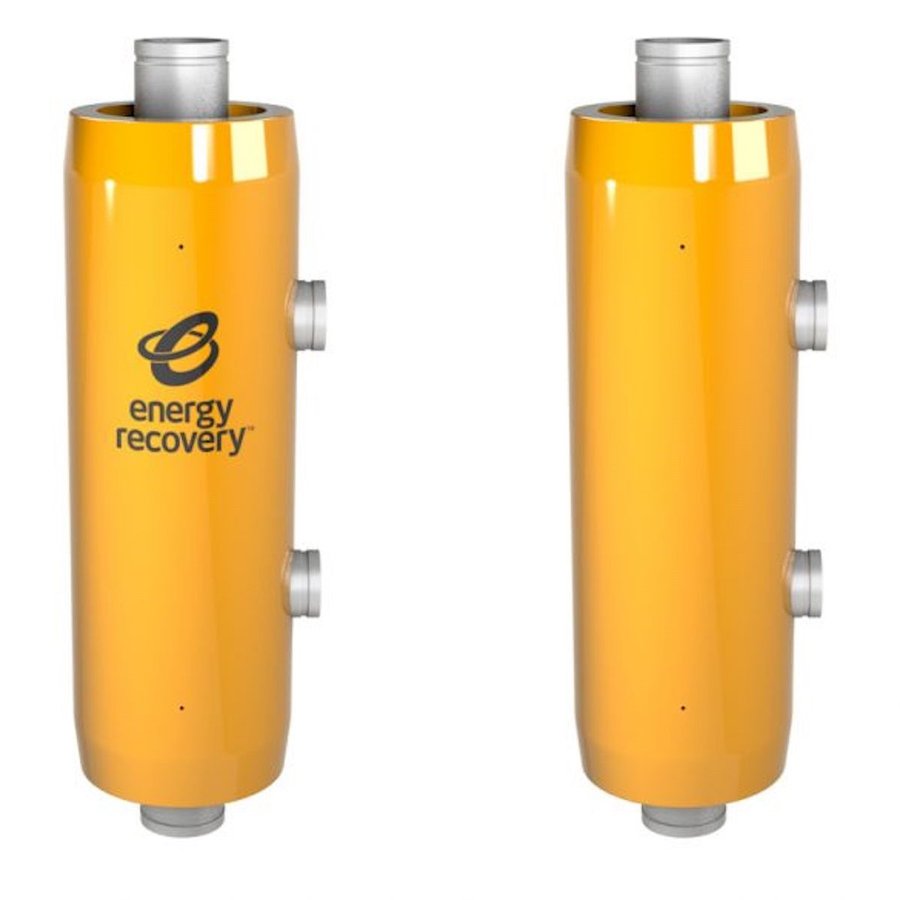
Energy Recovery, Inc. (ERI) manufactures the PX Pressure Exchanger line of energy recovery devices that capture hydraulic energy from the high-pressure RO concentrate stream. In seawater desalination, energy is the single largest operating cost. ERI devices can reduce power consumption by up to 60%, delivering a rapid return on investment and dramatically lowering the cost of desalinated water.
In a seawater RO system, the high-pressure concentrate (brine) stream leaving the membrane vessels contains a significant amount of hydraulic energy. Without energy recovery, this energy is wasted. The ERI PX pressure exchanger transfers the pressure energy from the concentrate stream directly to the incoming feed water, dramatically reducing the energy required by the high-pressure pump.
Official videos from Energy Recovery, Inc. Nothing is requested from YouTube until you press play.
Every ERI device does the same job — move pressure energy from the reject brine back into the membrane feed — but the family you pick is set by operating pressure and train flow, not by preference. The figures below are ERI’s published ratings from the 2025 Water & Wastewater Products Catalog.
| Family | Flow range | Max pressure | Peak efficiency | Typical duty |
|---|---|---|---|---|
| PX (high-pressure) | 4.5–90.9 m³/h (20–400 gpm) | 83 bar (1,200 psi) | 97–98% | SWRO of any size |
| PX Q400 | 65.9–90.9 m³/h (290–400 gpm) | 83 bar (1,200 psi) | 98% | Flagship high-capacity SWRO |
| LP PX (low-pressure) | 7–59 m³/h (30–260 gpm) | 31 bar (450 psi) | 97% | BWRO, potable and non-potable reuse |
| PX U (ultra high-pressure) | 2.3–56.8 m³/h (10–250 gpm) | 120 bar (1,740 psi) | 95% | UHPRO, ZLD and MLD wastewater |
| PX PowerTrain | 182–682 m³/h (800–3,000 gpm) | 83 bar (1,200 psi) | 98% | Pre-assembled ERD array for a full train |
| AT Turbocharger | 11–2,272+ m³/h (48–10,000+ gpm) | 27–83 bar (400–1,200 psi) | — | Any size SWRO; no instrumentation needed |
| LPT Turbocharger | 205–908 m³/h (900–4,000 gpm) | 45 bar (650 psi) | — | Low-pressure and 2-stage BWRO flux balancing |
Isobaric device or turbocharger? A PX transfers pressure directly between brine and feed and reaches the highest efficiency, but needs a circulation pump and low-pressure flow control. A turbocharger is a single rotating assembly with no instrumentation, no electrical connection and no motor — lower efficiency, but far simpler to install and operate, and tolerant of particulates. On two-stage brackish systems an LPT can replace an interstage booster pump outright.
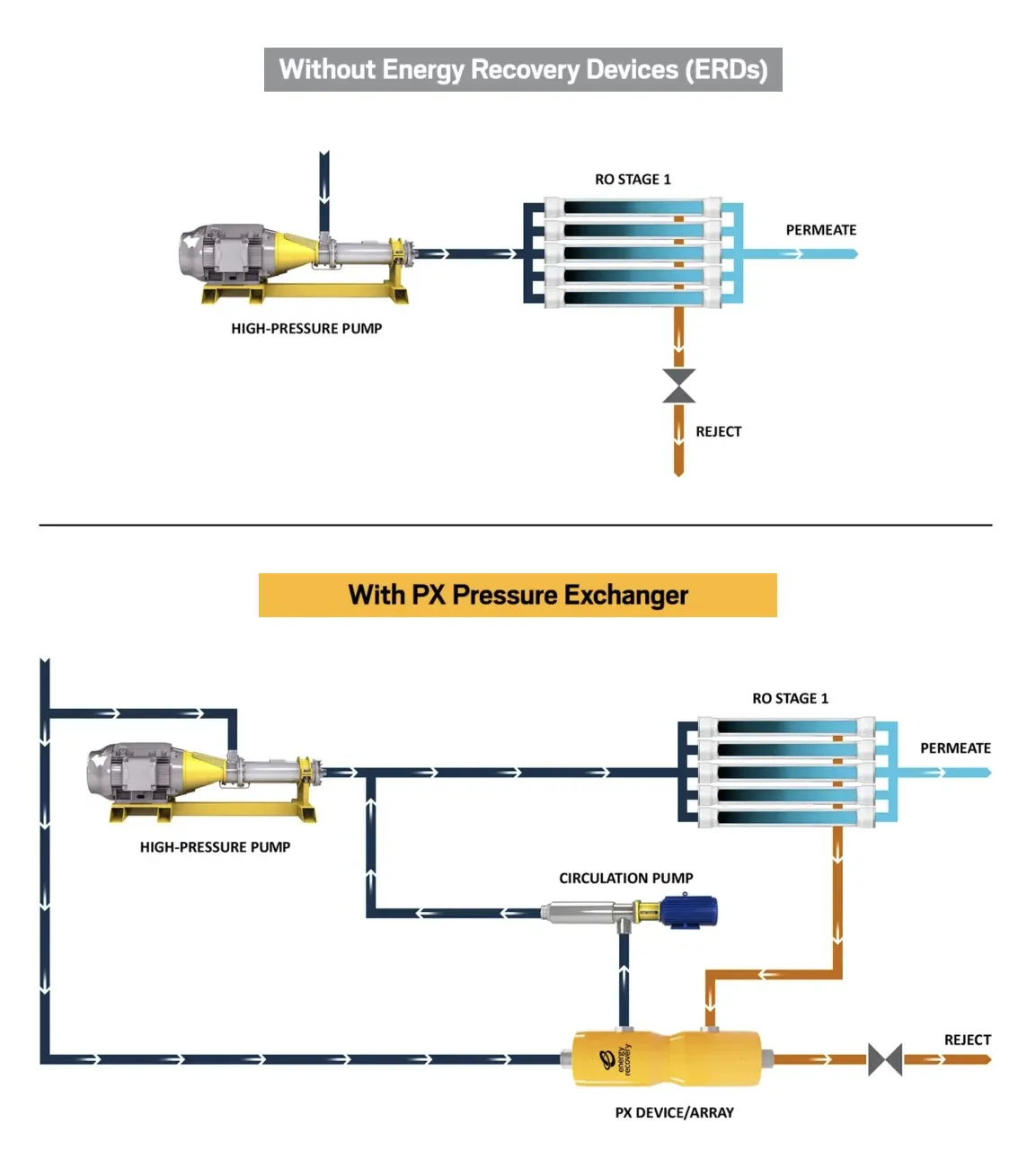
Four arrangements cover most of what we build. The choice follows the number of stages, whether the second stage needs a pressure boost, and whether the duty is seawater or brackish.
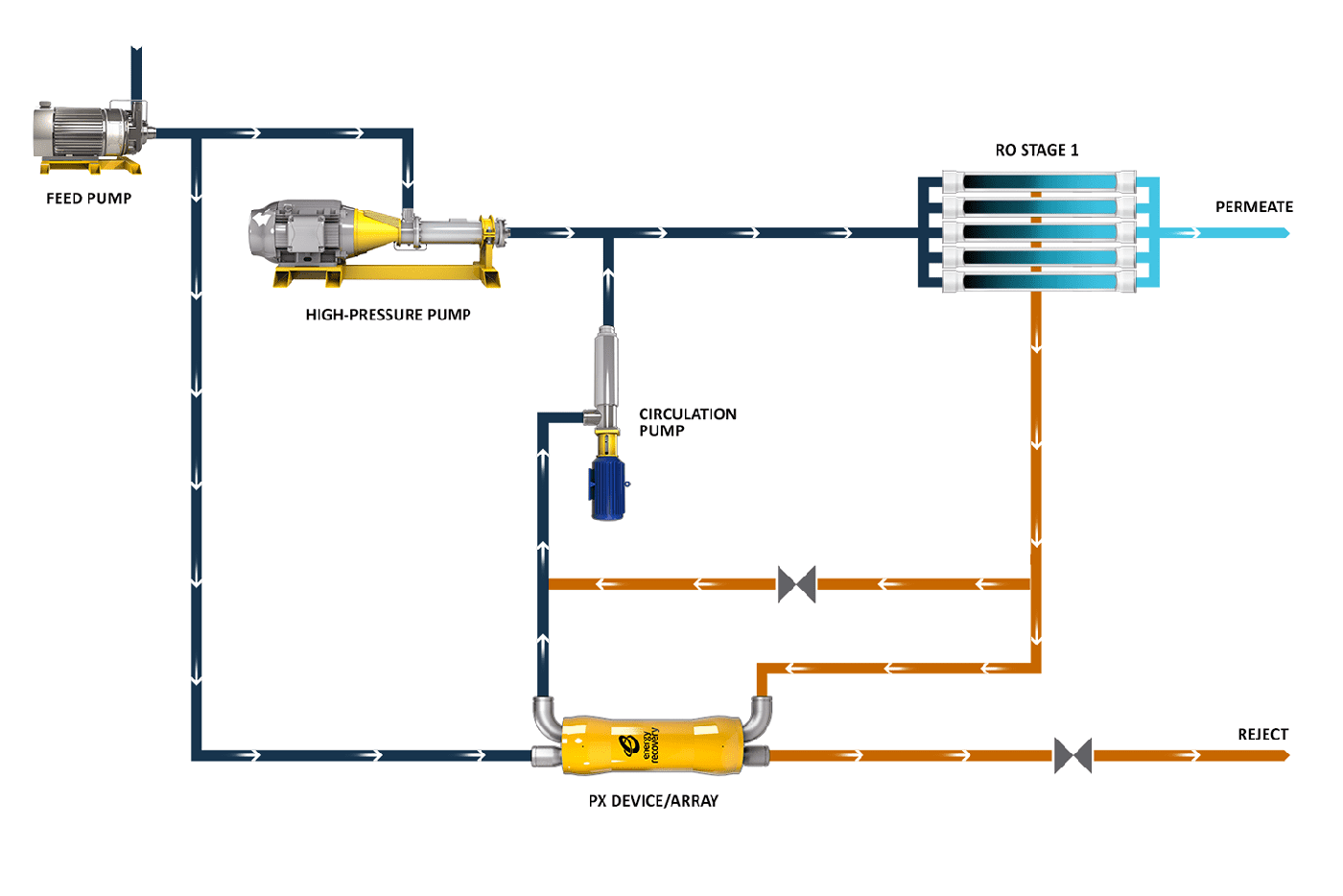
The standard SWRO arrangement. High-pressure pump feeds the array, brine drives the PX, and a circulation pump makes up the pressure drop across the device.
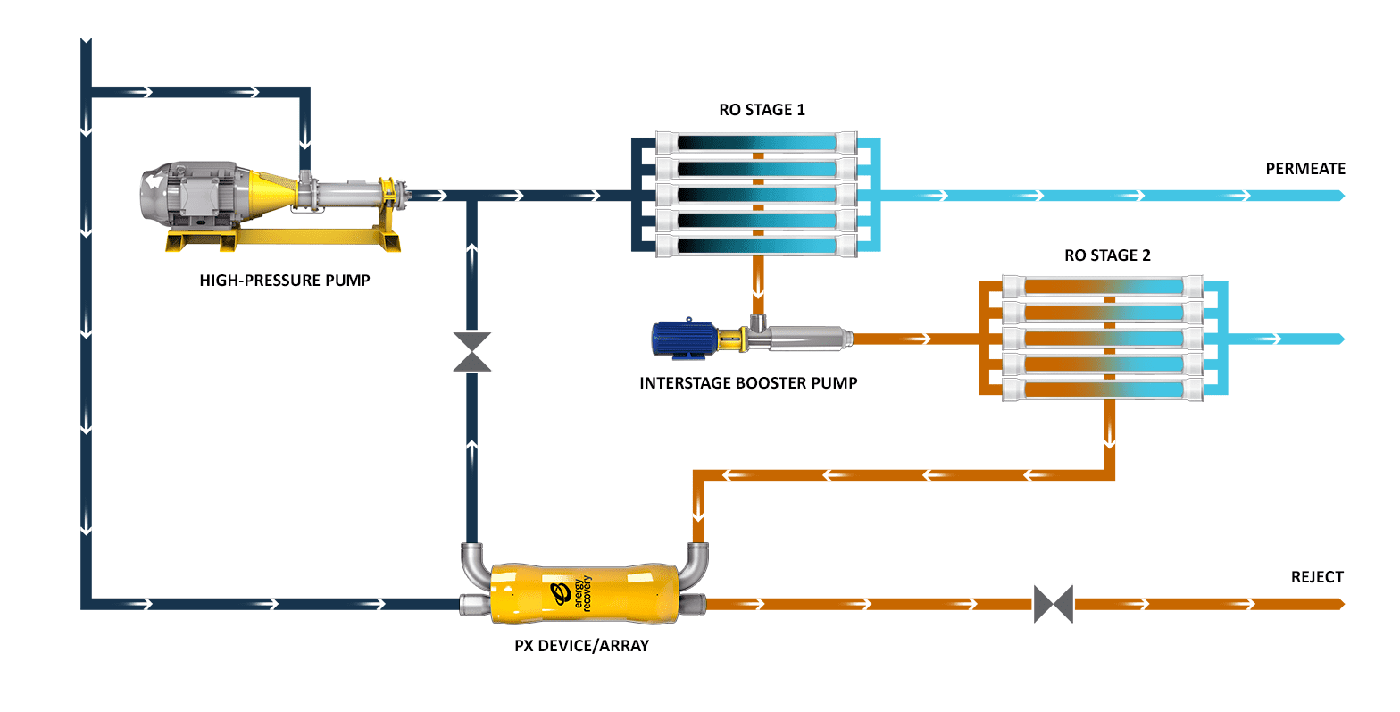
Balanced two-stage layout where the interstage booster lifts second-stage feed pressure and the PX recovers from final brine.
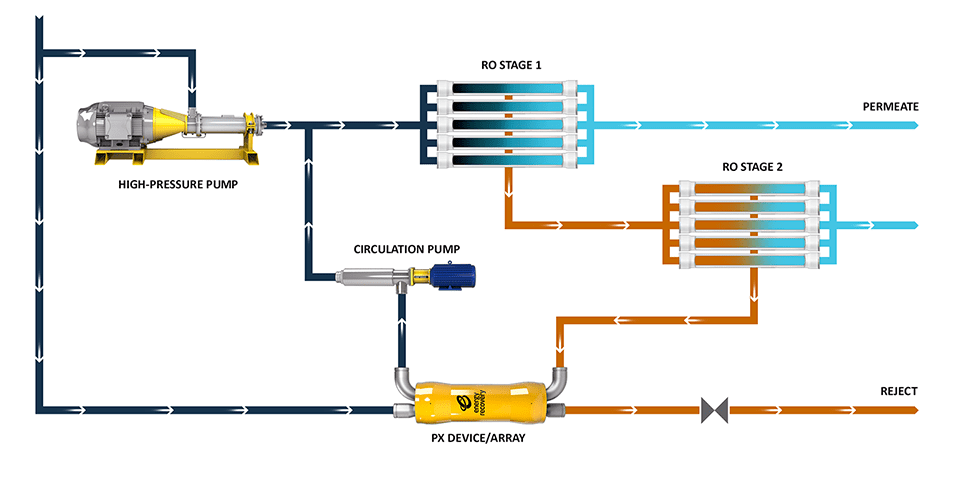
Brackish and reuse duty. The low-pressure PX works at up to 31 bar, so the whole train runs on lighter pressure-rated equipment.
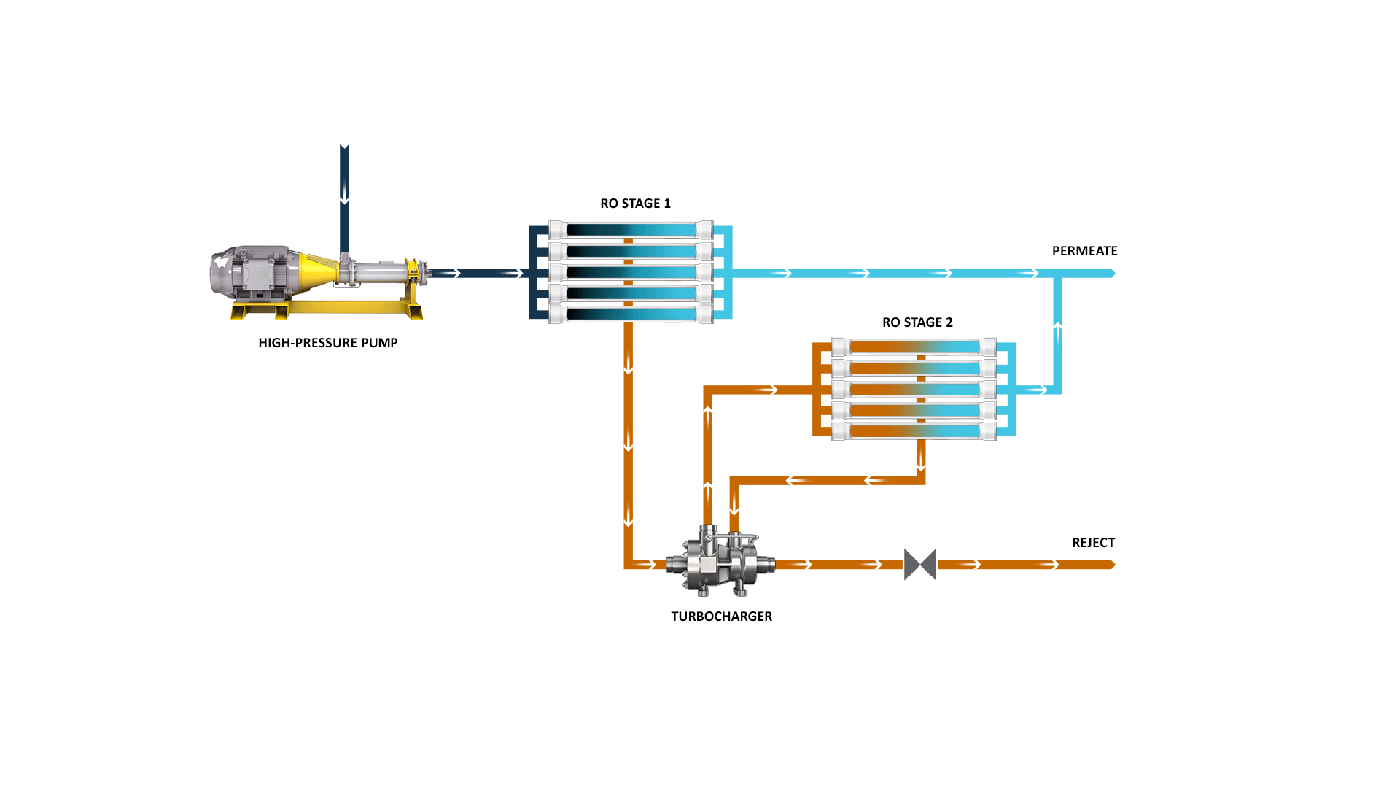
The turbocharger replaces the interstage booster pump entirely — no motor, no drive, no electrical connection to the second stage.
The families below are in the order ERI brought them to market. Dates are taken from ERI’s own published papers and case studies; where no public source states a year, none is given.
Hydraulic turbochargers were first introduced in the 1980s and became widely adopted in the 1990s, predating the pressure exchanger in RO service. ERI still develops the line, and it remains the simplest way to recover brine energy: one rotating assembly, no instrumentation, no electrical connection. Volute insert technology lets a unit be re-rated to a new duty point in hours rather than weeks, which matters when feed conditions shift after commissioning.
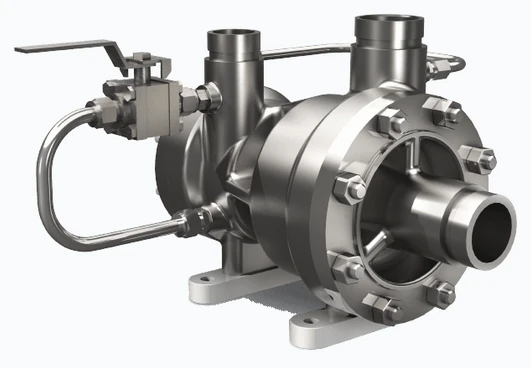
AT-95, AT-250, AT-350, AT-425, AT-550, AT-875, AT-1100, AT-1500, AT-2150, AT-3250, AT-4150, AT-6000, AT-7800, AT-11000. Flows to 2,272+ m³/h at 27–83 bar.
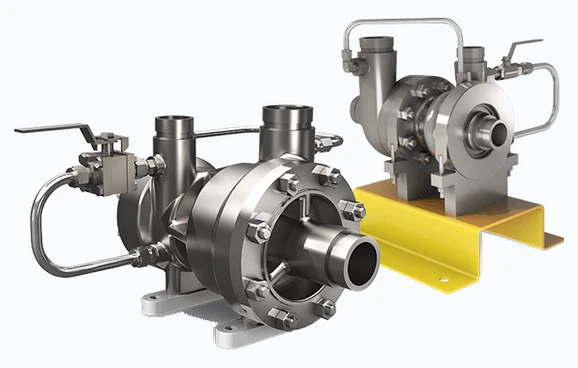
LPT-1000. 205–908 m³/h at up to 45 bar, for two-stage brackish flux balancing in place of an interstage booster pump.
The original PX line. ERI reports over 35,000 PX devices deployed worldwide since 2002, and PX energy recovery devices have been standard in SWRO trains built since 2003. Documented early installations include a PX-220 array at China Petrochemicals Dalian in 2003 and PX-140 and PX-220 units at Shengsi from 2004 onward — the Shengsi devices were inspected in 2008 and 2010 and showed virtually no wear.
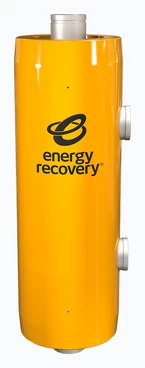
Small-frame first-generation device, still the reference for compact SWRO trains and pilots.
The smallest S-Series frames, for compact and pilot-scale seawater trains.
Large-rotor S-Series devices. PX-220 arrays date to 2003 installations and remain in service.
Mid-frame legacy device documented in service from 2004 and still supported.
The PX Q300 was introduced to the market in 2011, raising throughput per device so a train needs fewer units and less manifolding. ERI launched the PX Q400 as its new flagship in late 2022: up to 98% efficiency, under 3% volumetric mixing, and operating sound below 77 decibels — roughly a domestic vacuum cleaner, which changes what hearing protection a plant room needs.
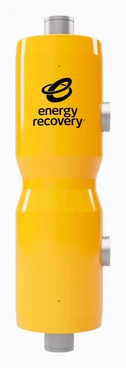
Highest-capacity Q-Series device, up to 650 gpm (147.6 m³/h), for large municipal trains.
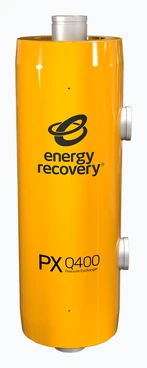
98% peak efficiency, under 3% volumetric mixing, under 77 dB. 65.9–90.9 m³/h (290–400 gpm).
The device that opened the Q-Series. Still widely specified and in service worldwide.
High-capacity Q-Series device for large SWRO trains.
Mid-capacity Q-Series device for medium and large installations.
Mid-capacity Q-Series device for medium SWRO trains.
Compact Q-Series device for smaller industrial SWRO systems.
Same ceramic core, rated to 31 bar (450 psi) instead of 83. ERI publishes up to 97% efficiency, 99.8% uptime and 30+ year durability for this line, matching the standard PX. Because it can often run on a plant’s existing feed and booster pumps, it is the usual choice for retrofitting energy recovery onto a BWRO or reuse train that was built without it.
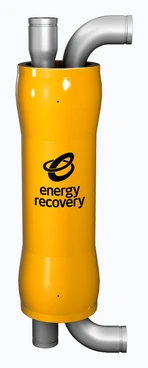
PX L140, PX L180, PX L220, PX L260 — 7–59 m³/h at up to 31 bar, 97% peak efficiency.
PX-45SB, PX-70SB, PX-90SB — small-frame low-pressure devices for compact brackish and reuse trains.
Built for ultra-high-pressure RO in zero and minimal liquid discharge duty, at pressures to 120 bar (1,740 psi) where conventional SWRO equipment cannot go. The first PX U40 was commissioned in early 2022, and the PX U250 followed at the Lubei Wanrun plant in July 2023. This is the line to look at when the problem is concentrating a brine rather than making permeate.
Largest of the ultra high-pressure line. First installations from 2023.
Modular UHPRO devices; the PX U40 was the first of the series in commercial service, from early 2022.
Smallest UHPRO device, for pilot and small ZLD/MLD trains.
PX-UL200 and PX-UL260 are the most recent devices to enter ERI’s documented range. PX PowerTrain is a different kind of product: the PX devices, frame and ancillaries arrive as one pre-engineered array rated 182–682 m³/h, which removes the array design and manifolding work from the project.
The newest additions to ERI’s published device range.
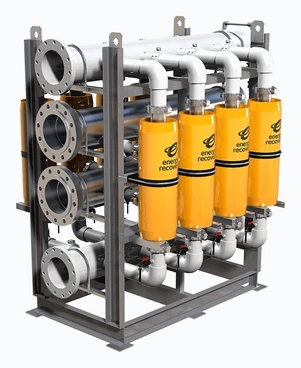
Pre-assembled ERD array, 182–682 m³/h (800–3,000 gpm) at up to 83 bar, 98% efficiency.
Adjacent line: ERI also builds the PX G1300 for CO2 refrigeration rather than water treatment. We do not supply it — it is listed here only so the product family is not mistaken for a water device.
A PX needs a circulation pump to make up the differential across the device. ERI builds the matching pumps, which is worth knowing when you are sizing a train — the pairing is already engineered.
| Pump | Flow | Max head | Pressure | Pairs with |
|---|---|---|---|---|
| Aquabold | 25–290 m³/h (100–1,275 gpm) | 847 m (2,777 ft) | 83 bar (1,200 psi) | Small to medium RO as the high-pressure feed pump |
| VPXP | 40–520 m³/h (175–2,300 gpm) | 74 m (242 ft) | 83 bar (1,200 psi) | PX on trains to 10,000 m³/day |
| HP | 10–57 m³/h (44–250 gpm) | 64 m (210 ft) | 83 bar (1,200 psi) | PX on trains under 1,000 m³/day |
| UHP | 4.5–22.7 m³/h (20–100 gpm) | 64 m (210 ft) | 120 bar (1,740 psi) | PX U40 and PX U80 in UHPRO service |
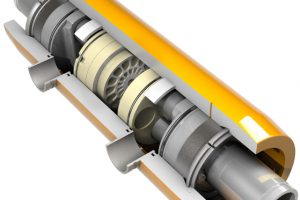
The durability claim rests on the construction, and ERI publishes the detail. The rotor is high-purity alumina ceramic — one moving part, three times more abrasion-resistant than steel and corrosion-proof. During operation it is suspended radially on hydrodynamic bearings and axially on hydrostatic bearings, so the ceramic surfaces never touch; the seawater filling the bearing gaps is continuously refreshed. Particulates that do enter are broken up and pass through.
The metal parts are rated for brine service with pitting resistance equivalent numbers above 40 and include 2507 super duplex, AL6XN, titanium and 316 stainless. ERI’s published fatigue analysis concludes PX components can run full-pressure cycles for 30 years without material failure, with no wear parts and no routine maintenance.
Quality control is worth noting if you are specifying: every ceramic cartridge has its rotor and stator gaps, roundness, parallelism and perpendicularity measured to fractions of a micron, all parts get dye-penetrant testing that flags any flaw larger than 75 microns, and every finished device is wet tested at maximum rated service pressure before it ships.
ForeverPure is an authorised ERI supplier, and our Santa Clara facility is about an hour from ERI’s San Leandro headquarters and manufacturing, so lead times on devices and spares are short. We specify, supply and integrate the device as part of the system rather than selling it in isolation — send a feed water analysis and a duty point and we will size the array with the rest of the train around it.
ERI (NASDAQ: ERII) designs and manufactures its ceramic PX components in-house in California, with additional facilities in Texas and support from Madrid, Dubai and Shanghai.
ERI manufactures PX Pressure Exchanger energy recovery devices — the PX Q-series and S-series — that transfer pressure energy from the SWRO brine stream to the feed, cutting seawater desalination energy use by up to 60%.
Yes. ForeverPure supplies and integrates genuine ERI PX pressure exchangers; parts are available through foreverpureplace.com.
Yes. We size and integrate ERI PX devices (or Danfoss iSave / FEDCO turbochargers) into the energy recovery train of a complete desalination system.
Contact us for system sizing and energy savings calculations for your SWRO project.
Request a Quote